

Feeders and Waterers in Modern Livestock Facility Design
By Linda Schmid, Rural Builder Magazine
For many rural builders, feeders and waterers sit just outside the traditional scope of building design. Yet these systems directly affect animal health, labor efficiency, and operating costs—and poor choices can undermine an otherwise well-designed agricultural facility. Builders who understand how feeding and watering systems work, and how they interact with layout, traffic flow, and environmental conditions, can provide valuable guidance to their agricultural clients.
While ranchers and livestock producers often know their animals exceptionally well, builders are frequently in a position to help translate those needs into practical equipment and site decisions.
Start With the Right Questions
Across manufacturers, the first questions tend to be consistent. Species and animal size matter most, followed closely by herd size and feeding method. A feeder designed for calves will not work for mature cattle, and head spacing, bar configuration, and overall height must match the animals using it. Ration type also plays a role. Grain, silage, total mixed ration (TMR), hay, and mineral supplements all place different demands on feeder design.
Usage patterns are just as important. How many animals need access at one time? In larger herds, it is common for 30 to 40 head to water simultaneously. Undersizing feeders or waterers is one of the most common mismatches, particularly when equipment is selected without considering peak demand.
Environmental conditions should never be an afterthought. Temperature extremes, freeze risk, soil conditions, and drainage all affect performance and longevity. A system that works well in a mild climate may struggle in cold weather or muddy conditions if not designed and installed correctly.
Common Feeder Types and Where They Work Best
Open feed bunks remain a staple in many operations. These non-automated feeders are simple, durable, and adaptable. Single-sided bunks can be placed along fence lines, allowing feeding without entering pens, while double-sided bunks increase access in larger feeding areas. Open-top designs work well for silage, TMR, and some hay applications.
Self-feeders are widely used where labor efficiency and feed control are priorities. These feeders allow animals to eat when they choose, reducing crowding and minimizing waste when properly adjusted. In range cattle operations feeding more than 200 tons of feed per year, self-feeders can significantly reduce losses – often to around five percent compared to feeding hay directly on the ground, which can result in 25% to over 50% waste due to trampling, soiling, and weather. Like feed bunks, single-sided self-feeders save space and work well along fence lines, while double-sided units allow more animals to eat at once.
Creep feeders are designed specifically for cow-calf operations. By using creep gates that allow calves through while excluding mature cows, these feeders let calves supplement their diet while still grazing with the herd. Over a grazing season, creep feeding can add substantial weight gain before weaning.
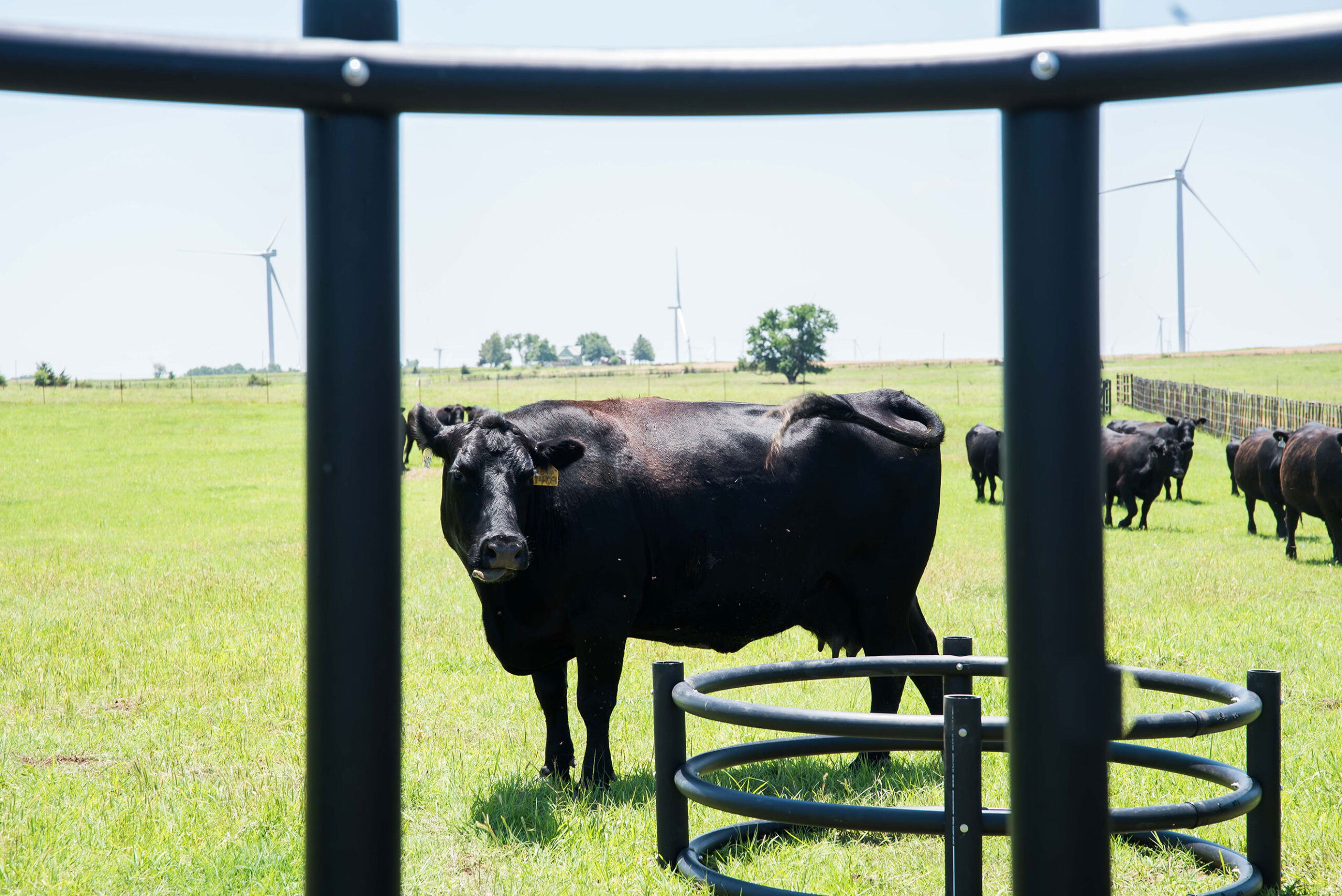
Hay feeders come in a wide range of designs, from basic ring feeders to cone-style units designed to keep hay centered and off the ground. Cone feeders and skirted designs tend to be more efficient, particularly in snowy or muddy conditions. Bar configuration matters; slanted or S-shaped bars reduce wasted feed compared to vertical bars, which can encourage animals to pull hay out and drop it on the ground.
Portability is another consideration. Free-standing feeders that can be moved regularly help manage mud, reduce corrosion, and distribute manure more evenly across a pasture. Many producers rotate feeders weekly to avoid excessive wear and waste buildup.
Waterers: From Simple Tanks to Engineered Systems
Water delivery ranges from basic tanks to highly engineered systems. Simple stock tanks—made from poly, galvanized steel, fiberglass, or concrete—remain common. Poly tanks are popular for their durability, forgiving nature in cold weather, and ease of cleaning. Larger operations may use tanks ranging from several hundred to 1,000 gallons or more to meet peak demand.
Automatic waterers introduce a continuous supply using inlet lines and float valves. These systems reduce labor by eliminating frequent refilling and help ensure consistent access. Ball-style automatic waterers add insulation and reduce freeze risk by limiting surface exposure.
Cold-weather strategies vary widely. Some producers rely on earth-tempered systems, burying tanks five to six feet below grade so ground temperature helps prevent freezing. Others use circulating systems where water flows through long troughs and recirculates back to a below-grade tank. Electric heaters and water agitators are also used, though they add energy and maintenance considerations.
Regardless of design, access and safety are critical. Barriers are often needed to prevent animals from climbing into tanks or damaging plumbing. Many free-standing commercial waterers incorporate these protections, while site-built systems require careful planning.
Layout, Drainage, and Traffic Flow Matter
Feeder and waterer performance is closely tied to placement. Builders should think in terms of animal movement, equipment access, and waste management. Areas around feeders and waterers should be sloped for drainage to prevent animals from standing in water, ice, or manure. Concrete aprons in front of feeders allow scraping with tractors or skid loaders and help maintain footing.
Inside confinement or housing barns, clearance for equipment is essential. Feeders must be positioned so skid loaders can deliver feed and remove manure without tight turns or obstructions. Ventilation also plays a role; poor air movement around feeding areas can contribute to moisture buildup and ammonia accumulation, affecting animal health.
Animal Behavior and Welfare Considerations
Feeder and waterer design can influence animal behavior more than many builders may realize. Dominant animals can crowd timid ones, particularly in undersized systems. Providing multiple waterers or feeders can reduce competition and improve intake across the herd. Self-feeders help mitigate bullying by allowing animals to eat at different times throughout the day.
Head size and neck spacing are critical safety factors. Improperly sized openings can lead to animals getting stuck or injured. Matching feeder design to animal size– and buying the correct model rather than attempting field modifications – is essential.
Materials, Durability, and Maintenance
Longevity varies widely by construction and maintenance. One-piece welded feeders made from heavy tubing and protected with powder coating, paint, or plastic coatings can last 20 to 30 years when maintained. Bolted, multi-section feeders may offer flexibility but often have shorter service lives as seams weaken over time.
Moisture is the primary enemy of metal feeders. Corners and pan edges tend to rust first, especially if wet feed accumulates. Drain holes are a key indicator of good design. Regular cleaning—removing wet feed and debris—is the most effective maintenance step, even if it is done simply with water.
Poly water tanks can last decades but can be damaged by impact, such as striking frozen sides to break ice. Using heaters or circulation devices instead of force reduces the risk of cracking or seam failure.
Helping Clients Make Better Choices
For builders, the goal is not to replace the producer’s knowledge but to support it. Many ranchers know their animals intimately and appreciate builders who ask the right questions and help anticipate problems before they show up in the field. Properly sized, well-placed feeders and waterers reduce waste, protect animal health, and lower long-term maintenance costs.
When feeders and waterers are coordinated with building layout, traffic flow, and environmental conditions, they become part of an integrated agricultural system rather than an afterthought—and that is where builders can add real value.